
I have oily skin. Should I still use a moisturiser?
You wash your face in the morning, and by midday your forehead and nose start to shine. Putting on cream is the last thing on your mind. Yet the most common mistake with oily skin is giving up moisturiser altogether.
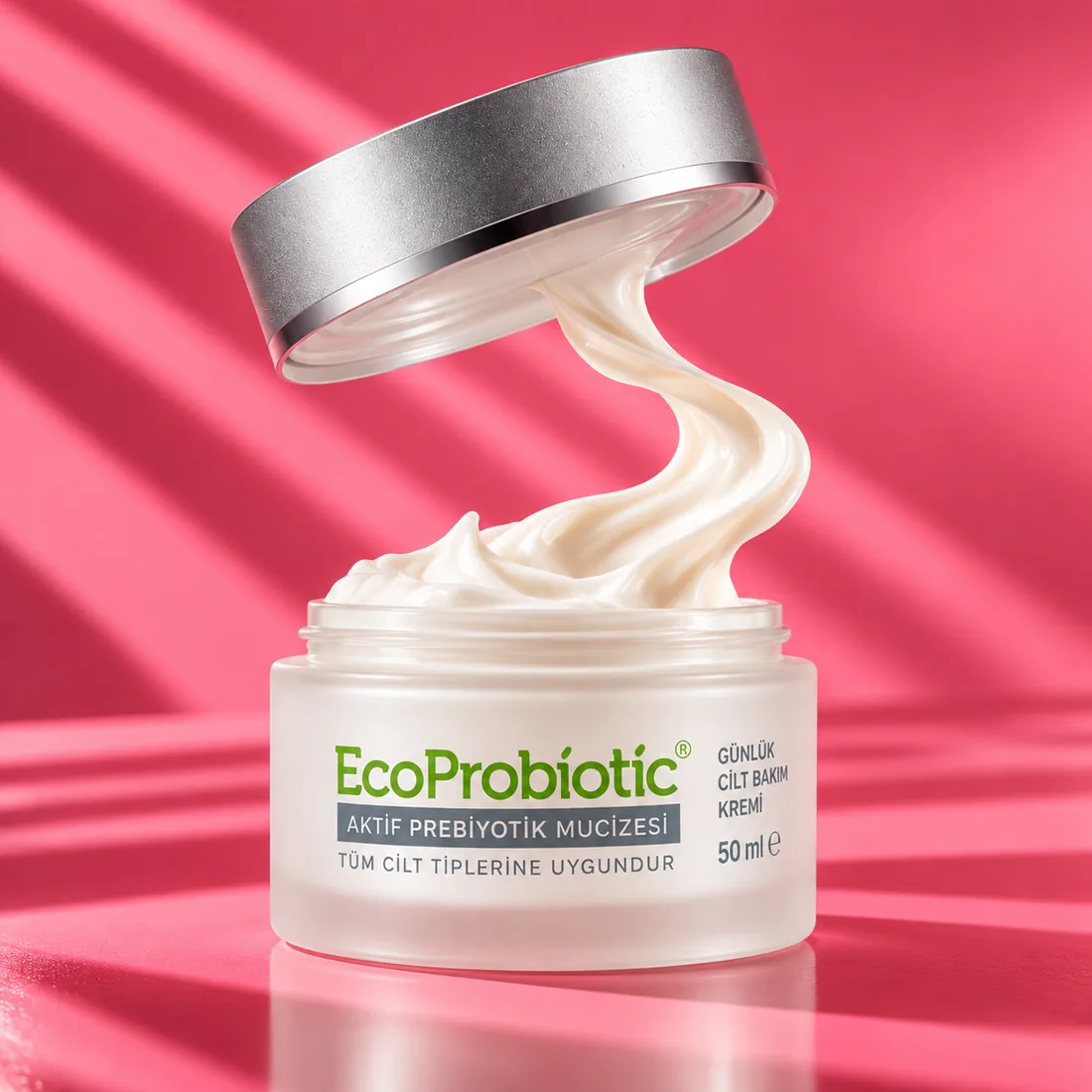
Oil is one thing, moisture is another
The shine on your face comes from the oil your oil glands produce. Moisture, on the other hand, is the water in your skin. Skin can be oily and dehydrated at the same time: it shines on the surface, but underneath there is tightness and, here and there, flaking.
This is especially common in people who use harsh, oil-stripping cleansers and alcohol-based toners. The oil goes, but your skin's protective lipids go with it.
The right cream: a light gel cream
The problem is not using a moisturiser; it is choosing the wrong cream. Thick, greasy creams sit on your face, add to the shine and clog pores in some people. For oily skin, choose a light, water-based gel or gel cream.
Can a prebiotic cream be used on oily skin?
Yes. Prebiotics support the natural community on the surface of the skin, an approach that works together with the skin's protective layer in every skin type, oily or dry. What matters is a light texture.
Recent assessments regard prebiotics applied to the skin as generally well-tolerated ingredients. Even so, it is worth noting that larger studies are needed in this field.
What to look for when choosing
A short list:
- A light, water-based gel or gel cream
- Formulated so that it won't clog pores
- A formula that supports your skin's protective layer
- No alcohol: it feels cooling at first but dries your skin out
- Apply a pea-sized amount morning and evening, and even less on your T-zone
Sources
- 1.Endly DC, Miller RA (2017). Oily skin: A review of treatment options. Journal of Clinical and Aesthetic Dermatology 10(8): 49-55. Review.
- 2.Ananthapadmanabhan KP, Moore DJ, Subramanyan K, Misra M, Meyer F (2004). Cleansing without compromise: the impact of cleansers on the skin barrier and the technology of mild cleansing. Dermatologic Therapy 17 (Suppl. 1): 16-25. Review.
- 3.Taléns-Visconti R, Diez-Sales O, Nácher A (2026). Cosmetic interventions for skin microbiome modulation: current strategies and future directions. Skin Research and Technology 32(4): e70352. Review.
This article is for general information only. If you have a skin problem that persists or gets worse, see a dermatologist.