
Why does your skin feel tight? What you need to know about the skin barrier
On the very outside of your skin there is a very thin protective layer. It keeps the moisture in your skin inside and keeps irritants from outside out. Experts call it the skin barrier. If your face feels tight during the day, or a cream you have always used suddenly starts to sting, this layer is most likely worn out.
How does this layer work?
The outer layer of your skin is made of cells stacked on top of each other and the lipids that fill the gaps between them. It is these lipids that really stop moisture from escaping. When they run low, moisture slips out through the gaps, even if the cells stay in place.
That is why worn-out skin does not always look dry. Sometimes it just feels tight, sometimes it turns red, and sometimes a product you are used to suddenly starts to sting.
How can you tell your skin is worn out?
If a few of these sound familiar, your skin may need a little support:
- Tightness that lasts a few minutes after washing your face
- Flaking around the sides of your nose, your eyebrows or your chin
- Products that normally don't bother you starting to sting
- Make-up settling into dry patches
- Your cheeks turning red in winter or in an air-conditioned room
What wears it out the most?
Hot water: In one study, the same cleanser used with water at 40 degrees made the skin lose much more water than with water at 20 degrees. Washing your face with lukewarm water is a small change that really helps.
Harsh cleansers: Cleansers that foam a lot take your skin's lipids away along with the dirt. If your skin squeaks after washing, take it as a warning.
Dry air: Central heating, air conditioning and cold weather dry your skin out. That is why your skin struggles in winter, and in the office in summer.
Shaving: A razor takes off a thin layer from the very outside of your skin along with the hair. That is where the sting after shaving comes from.
How do you help it recover?
First, cut back on what wears your skin out: lukewarm water, a gentle cleanser, patting dry with a towel instead of rubbing. Then give your skin moisture and keep that moisture there. The easiest way is to apply your cream straight after washing your face, while your skin is still a little damp.
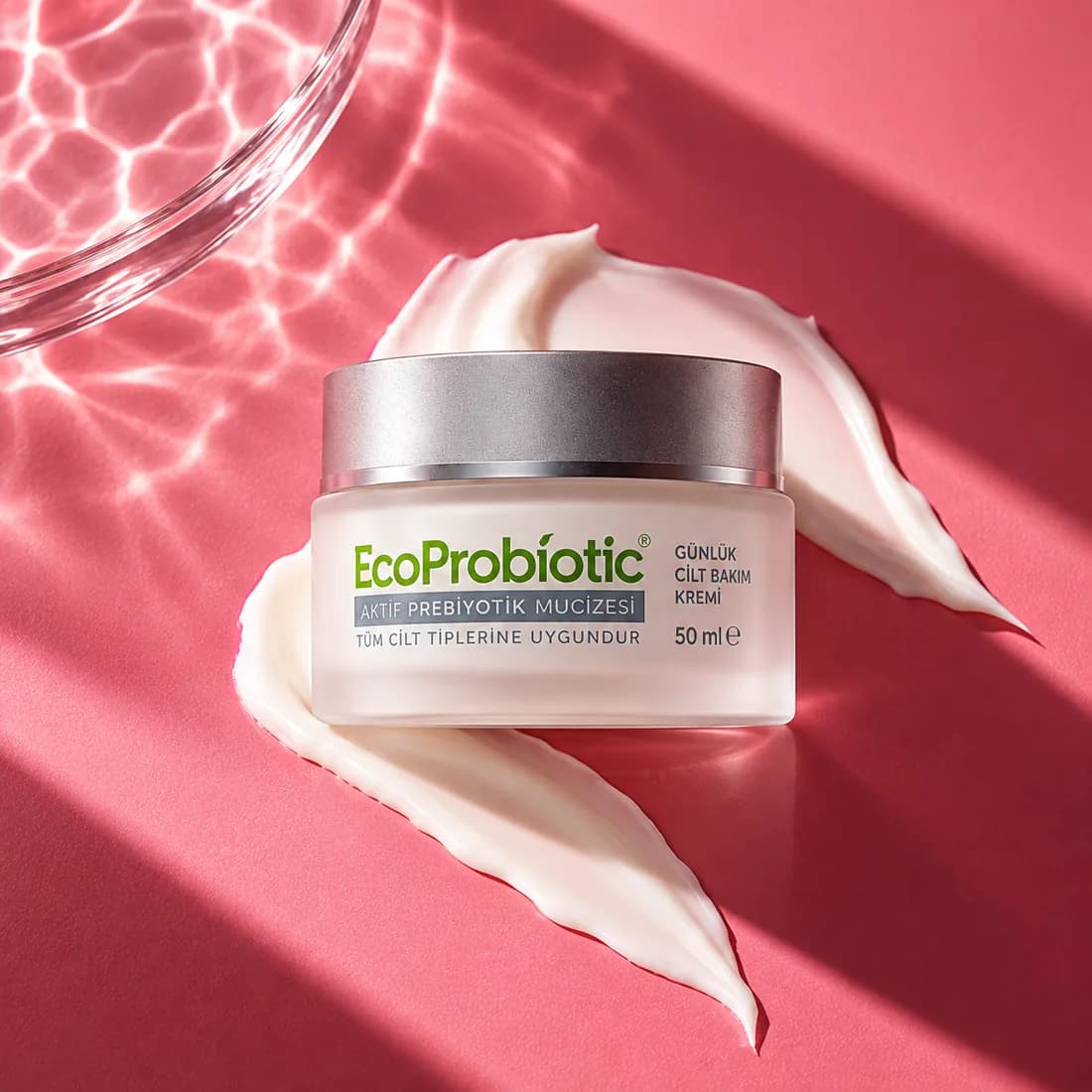
A prebiotic cream is a good option for supporting your barrier. Prebiotics support the natural community living on the surface of your skin, and that community works together with your barrier. Prebiotic Skin Cream was made for exactly this.
Your skin won't recover overnight. Use a cream regularly, morning and evening, for at least two weeks; then decide.
Sources
- 1.Elias PM (1983). Epidermal lipids, barrier function, and desquamation. Journal of Investigative Dermatology 80 (Suppl.): 44s-49s. Basic science.
- 2.Rawlings AV, Harding CR (2004). Moisturization and skin barrier function. Dermatologic Therapy 17 (Suppl. 1): 43-48. Review.
- 3.Ohlenschlaeger J, Friberg J, Ramsing D, Agner T (1996). Temperature dependency of skin susceptibility to water and detergents. Acta Dermato-Venereologica 76(4): 274-276. Clinical study.
- 4.Ananthapadmanabhan KP, Moore DJ, Subramanyan K, Misra M, Meyer F (2004). Cleansing without compromise: the impact of cleansers on the skin barrier and the technology of mild cleansing. Dermatologic Therapy 17 (Suppl. 1): 16-25. Review.
- 5.Engebretsen KA, Johansen JD, Kezic S, Linneberg A, Thyssen JP (2016). The effect of environmental humidity and temperature on skin barrier function and dermatitis. Journal of the European Academy of Dermatology and Venereology 30(2): 223-249. Review.
- 6.Cowley K, Vanoosthuyze K (2012). Insights into shaving and its impact on skin. British Journal of Dermatology 166 (Suppl. 1): 6-12. Review.
- 7.Lodén M (2003). Role of topical emollients and moisturizers in the treatment of dry skin barrier disorders. American Journal of Clinical Dermatology 4(11): 771-788. Review.
This article is for general information only. If you have a skin problem that persists or gets worse, see a dermatologist.